
There Will Be Waves (Part 1) - The Sighten Story
Entrepreneurship as spiritual path


Part 1 - The Call
“The mountains are calling and I must go.” - John Muir
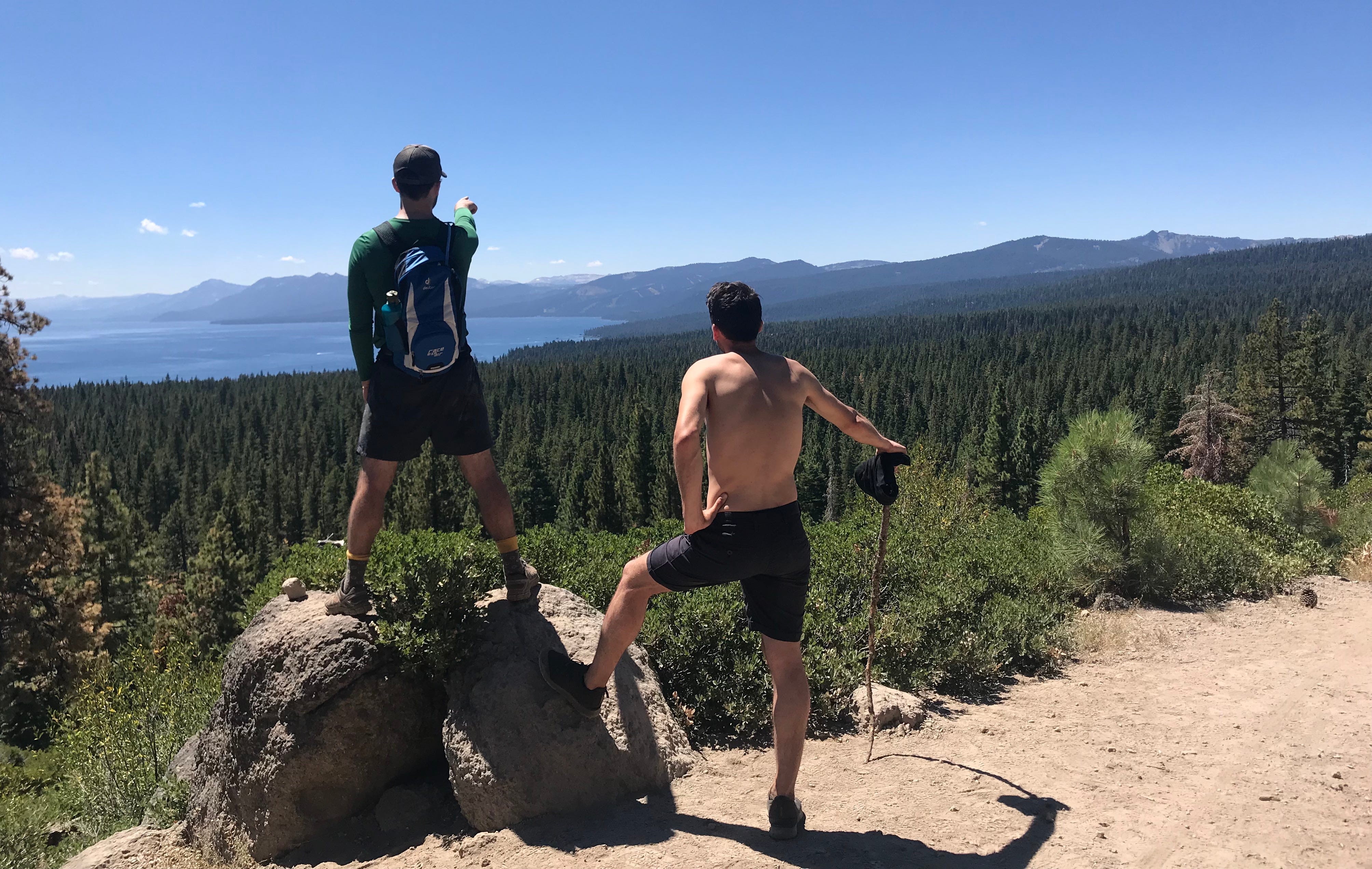
November 2019
“Conlan, there’s no easy way to say this…we can’t do the deal.”
“What? What do you mean you can’t do the deal? The deal is done—we’re signing on Friday! I was just sending out notices about the acquisition like we talked about,” I replied.
“I know and I’m so sorry, but the acquisition wasn’t approved at a board meeting this morning. I actually don’t have any more information than that. You’ll have to call our CEO.”
I staggered out of the Peet’s Coffee in North Oakland, my knees suddenly unsteady, and the midday sun set against a cloudless blue sky was oppressive in its clarity. I tried to orient myself, grasping for anything familiar—but the universe seemed to blink and then glitch, an ugly unreality assaulting my senses.
“You said this whole time that board approval was a formality! You realize that we may be completely fucked, right? I mean we may not make it to the end of the year. We spent so much time and money on this deal, and now it’s just gone? Two days before closing?” I said, my voice catching, as I felt the growing wetness of tears.
For a moment, there was no answer—only silence. A familiar mixture of hollowness and heaviness filled my chest—heartbreak—as I realized I was being left at the altar. My counterpart, my intimate co-collaborator in planning our shared post-acquisition future, had vanished, replaced by a matter-of-fact voice that just wanted the call to end.
My mind flashed with the dire potential consequences of the acquisition dying at 11:59pm: layoffs, insolvency, personal debt, shutting down my company—seven years down the drain. I had been able to reach out and touch the finish line, to taste the storybook startup ending after years of wandering in the desert. Now all that evaporated like a mirage, everything turning to dust before my eyes. We had dodged catastrophe, cheated death too many times to count—but this was different, almost certainly the end of the line. It would take everything I had to even begin charting a path forward after this wreckage, and I was so tired. Maybe it was time to give up the fight and let Sighten die.
In my desperation, I felt the CEO mask slipping; then I heard my own voice ask a question.
“What would you do if you were me?”
The answer, when it came, felt like it was whispered from a million miles away. Instantly, I was an ant shipwrecked in the middle of the ocean.
“I don’t know, I’ve never been an entrepreneur. Good luck, Conlan.”
On a cool and bright November morning in 2012, I became the Chief Executive Officer (CEO) and Co-Founder of Sighten—a software platform for solar companies, and eventually, a marketplace for solar projects to secure financing. While official-sounding, acquiring this identity entailed nothing more than quitting my well-paying tech job, updating my LinkedIn profile, and ordering cheap business cards.
Despite the fact that my initials are, coincidentally, CEO (Conlan Edward O’Leary), my path to becoming an actual CEO had some strange pit stops. Far from a preordained destiny, for most of my life I seemed more likely to end up a Buddhist monk or mountain-town bartender than to actualize my initials as the leader of a business.
There were signs from the very beginning, including the first clear memory I possess. I was three years old, and I remember I could feel the sun, its gentle rays lightly lapping my skin, one of those blissful late summer days when nature seems to pause at its peak, basking in her extent and magnitude. Suddenly there were ants—black carpenter ants, diligently going to and fro, some carrying leaves and other miscellanea, all in continual motion, apparently directed by some unseen hand or force.
And then a tiny foot, my baby brother’s, came crashing down, and Eden became a war zone: the dead intermingled with the severely maimed desperately trying to operate broken legs and crushed torsos. Something shattered inside me, and a dark energy seemed to rise from the cracks, a black awareness coming into consciousness. There was no unseen hand; there was nothing. My dad found me a few minutes later, sitting deathly still as I cried quietly, all the energy drained from me.
“You have such a big heart, Conlan. I can see how much you care about the ants,” he said as he held me. Speaking more to himself than to me, he added, “How can we help that big heart navigate this often harsh world?”
The ants story became lore in my family, the foundational evidence for my empathic, sensitive-almost-to-the-point-of-disability nature—not exactly hard-charging, win-at-all-costs CEO material. At the very least, it was clear I would not be founding an ant-ranching, insect protein business.

Managing my ultra-sensitive nervous system felt like an impossible task—as if I had been given a Ferrari without brakes (or driving lessons, for that matter), a machine that reliably generated way more energy than I could handle. Maybe it was theoretically a gift, as my parents told me (while they also privately worried), but day-to-day, it was simply overwhelming. School eventually offered what felt like salvation, an escape hatch called the intellect (sports helped too). The confines of the mind, with its abstract ideas and ethereal concepts that were immune from the slings and arrows of the physical world, a plane of existence far removed from having to feel, seemed a far more palatable place to reside.
This path reached its crescendo taking the Long Island Railroad to the C train to the M86 bus each day on my way to Regis, an all-scholarship (free) Jesuit high school in Manhattan for “promising young Catholic boys.” While I was definitely a young boy, “promising” was up for debate, and “Catholic” was a stretch, given that my family had logged significantly more Yankees games (see previous picture) than church appearances. Colin Jost once wrote that “for Catholics in New York, Regis is almost like the Watchtower building for Jehovah’s Witnesses.” Even my non-religious parents couldn’t escape its gravity, deciding to forgo a slew of good local schools to drop their half-conscious teenager off at a train station still shrouded in predawn darkness, the daily starting point for a bleary-eyed pilgrimage, my only companions my friend’s dads going to Wall Street.
At Regis, the idea that there might exist some ultimate truth—Truth with a capital T—took root in me. There was the influence of being immersed in organized religion and its epistemic hubris (THIS is IT!) every day for the first time, but it was also just the logical culmination of my deepening, increasingly categorical commitment to the life of the mind. If ideas were the only real, durable thing, what was the most real idea, the foundational concept that sat at the base of all others? Organized religion had a clear answer: God.
I had long envisioned God as Abraham Lincoln, due to an apparently formative trip to Washington D.C. as a young child. But by high school, the idea that any omnipotent being, President Lincoln or otherwise, cared whether I masturbated or not seemed strange and petty (though I was certainly biased on that specific topic). Did he not have more important things to tend to? I suppose this was just the most visible example of the arbitrary rules, the rigid hierarchy, the “take it or leave it” nature of organized faith that rubbed me (no pun intended) the wrong way. It seemed like we were anthropomorphizing God, bringing Him down to our level, rather than raising ourselves up to meet Her.
In many ways I felt spiritually adrift, but one thread of Christian thought kept me connected: “God is love, and whoever abides in love abides in God, and God abides in him.” Relative to policing teenage self-pleasure, infinite, unconditional love for all beings seemed a far more appropriate hobby for someone with God’s résumé. My parents, dogmatically relaxed but highly ethical people, helped translate this into something more concrete, a compass to live by, often quoting JFK (paraphrasing the Bible) to my brother and me: “To whom much is given, much is required.” At Regis, the official motto was “Men for Others,” and though I would eventually rebel against many things, I never questioned the idea that the most important thing we could do was to love our neighbors as ourselves, and to ensure our life’s work reflected this love. It was to be Christianity’s enduring gift to me.
But beyond these core teachings of love and service, the philosophy of Christianity—with its emphasis on just believing certain historical “facts” and following very specific rules—still seemed like a lot of arbitrary window dressing. So I began turning over every rock, looking for that unassailable foundation that would answer the big questions, make everything make sense, maybe even give my life purpose. I immersed myself in the Western philosophical canon, before a rebellion that felt somewhere between Nietzschean and emo-infused led me to a yearlong independent study of Eastern religions during my senior year.
The Buddha’s goal, the end of suffering and enlightenment, seemed as audacious and noble as his prescription, the philosophy and practices of Buddhism, was convincing and comprehensive. It was love at first reading. The Buddha also explicitly told his followers not to take anything on blind faith, but instead to try his methods (chiefly meditation) for themselves, accepting only what proved worthwhile. The onus is on each individual, through rigorous practice, to wake up to their true nature (Buddha literally means “awakened one”), a prospect that felt both empowering and exciting. We didn’t have to wait for the afterlife; we could figure it out here and now, in this life. There also seemed to be less emphasis on masturbation as sin—which, as a 17-year-old, was certainly a plus.
Just as Buddhism seemed to offer the rock-solid foundation I had been searching for, college offered a new and intoxicating escape hatch: partying. It agreed with me about as much as philosophizing did—which is to say, a lot. Still, my sophomore year I abruptly decamped from the mountains and fraternity basements of New Hampshire to a Buddhist monastery in rural Thailand, where I meditated for hours each day, taught English, and abided by all monastic rules, including not eating any solid food after 12pm.

That first afternoon, I couldn’t help but give a confused smile as I watched large groups of monks devour all types of frozen treats, supremely confident in their compliance with the fasting precept, a rule formulated by the Buddha himself as a means to tame sensual desire. Apparently, a detailed exegesis of Buddhist doctrine had revealed that ice cream didn’t count as “food” because it is technically a liquid at room temperature. Still, something about the Choco Taco as appetizer to enlightenment didn’t quite compute for me. I stuck to a glass of juice, and the monks laughed at the doctrinaire Farang (Thai for “white person”) who apparently saw God and ice cream as mutually exclusive.
Each morning at the monastery, sitting on my meditation cushion with my septuagenarian guru opposite me, sweat would slowly and inexorably build, even in places I didn’t know could sweat, as my Irish and German DNA fought and lost a battle against the tropics. In spite of the sweat or maybe because of it, meditation gradually moved me into the experiential, contemplative core of Buddhism, and I began to discover for myself the very non-ordinary states of consciousness detailed by the Buddha, where the universe seemed to operate according to an altogether different set of laws. With each sit, it became clearer that consciousness, far from inert, had myriad forms and influenced reality in profound, even constitutive ways. As within, so without. What’s more, the deeper I went, the more everything kind of started to dissolve into one giant thing, an apparent unity that often felt more real than the everyday world of 10,000 things.
It felt as though the universe was leaning in close and whispering her secrets to me, and I eagerly followed her breadcrumbs toward what seemed like some type of ultimate realization. But eventually my study abroad term came to an end, and I had to return to cooler, less spiritual climes—enlightenment unattained. Even if I hadn’t reached the mountaintop, it felt like my life had irrevocably shifted. I had found the path; I just had to keep going. With this new and expansive map of reality, it seemed like getting lost was impossible.
As it turned out, at least for me, getting lost was not only possible, but inevitable. Maybe there are certain spiritual aspirants who can continue spiritually aspiring on a college campus, but I was too easily distracted by beer, girls, and sports. Core to Buddhism is the concept of the Bodhisattva: a being who has achieved enlightenment but remains in the world to help others, an act born of pure love and compassion. I was more of a Partysattva, an unenlightened being who forgoes the spiritual path to fuck around. A week after my last monastery meditation, I found myself at the bottom of a violent mass of humanity after being tackled in a rugby game, my mind circling the drain with a single despairing refrain: This shit is so fucked up. Why??? Rugby-pile consciousness was apparently on a different map.

After graduation, there was the “Into the Wild” epoch, working as an assistant production manager at an Alaskan salmon cannery. In between long hours of processing salmon and halibut on the line, I dispensed informal performance improvement plans (PIPs) that entailed commitments like “only” doing cocaine instead of also using heroin, so that workers with a proclivity for hitchhike-to-Anchorage-benders following payday would be more likely to show up to work. Cannery life was a crash course in human nature, especially the parts you don’t easily find in a monastery, as the no-questions-asked nature of employment meant there were many souls on the run—from the law, from gangs, or most often, from their own demons.
Imploring and cajoling colleagues to show up to work sober or to refrain from threatening coworkers with weapons made the management challenges I would later confront in startup life seem tame, even boring, in comparison. Alaska could be a dangerous place, with risk emanating from grizzly bears, heavy machinery, or other humans depending on the day. But after four years of perfectly manicured college lawns, the wildness of “the last frontier” was intoxicating. Nature, untamed. Late that summer, encouraged by copious amounts of alcohol at the Salty Dog Saloon one night on the Homer Spit, I even agreed, for all of 12 hours, to co-found a new cannery there. Two roads diverged in a yellow wood—I mean a dank Alaskan bar.

As summer slipped into fall, the looming prospect of almost total darkness and bone-rattling cold occasioned a re-evaluation, and I migrated south—a fully confirmed fair-weather Alaskan. After running out of cannery money in South America, I eventually landed in San Francisco, broke and unemployed, another mostly clueless recent grad following friends west. Amidst a fog that seemed to shroud my future, there was one certainty that periodically shone through, a lighthouse diligently trying to show the way.
It was the belief that beneath everything, there was one thing, even if it went by many names: God, the universe, pure being, non-duality, emptiness, infinite consciousness, buddha-nature. Although I had read plenty of dense books that had convinced me, logically, of the fundamental unity of existence, it sometimes seemed like something intuited, or even felt, rather than reasoned. Almost like Love. As I moved between fraternities, monasteries, canneries, continents, it was the one constant thread, the seed that kept germinating no matter how many times I turned away or got lost. It felt immense, like an iceberg—arresting, beautiful, and a little terrifying.
In the here and now of San Francisco, I badly needed a job to pay my $700 rent and get health insurance (not optional, given the occasional violent rugby pile). As I tried to reconcile these big spiritual truths with my precarious financial situation, I returned to that foundational ethic: “To whom much is given, much is required.” Climate change, a global problem affecting all beings, had long struck me as my generation’s most critical challenge, so working on climate solutions seemed like a tangible way to honor the unity while also earning a paycheck. Years later, I would encounter the concept of existential risk, and realize that it had long been a guiding principle for me—my own way of operationalizing the “much is required” imploration, even if I had used different words to describe it. I didn’t know where this path would lead, but it felt right. I had found some semblance of an “economic purpose,” or at least a direction to walk within the arena of capitalism.
Moreover, as I settled in the Bay Area and truly took in the incredible scope and magnitude of the innovation happening around me every day, it started to feel absurd, even negligent, if we couldn’t figure out how to thrive materially while respecting the earth. As I saw it, capitalism and technology could be transformed from unwitting accomplices into tools for salvation, if only we could widen our perspective beyond social media, SaaS, and the lure of instant enterprise value gratification. There were some false starts and dead ends in the post-Great Recession job market, but I eventually scrapped my way into the small corner of the tech world working on climate solutions (then called “cleantech”, now more often “climate tech”). I interned at a carbon credit startup, worked at a small cleantech investment bank, and finally joined a solar software startup.
It was unclear whether I was actually good at any of the jobs that I held—performance reviews cut both ways—but I did quickly learn a lot about Microsoft Excel and humility. Knowledge regarding business, startups, and climate technology came more slowly. The most important lesson, however, was that while the young might be long on cluelessness (as I certainly was), experience could also be a double-edged sword, imbuing the experiencer with either wisdom or blind spots, depending on how they related to it. Experience unexamined, or internalized unconsciously, breeds Pavlovian, habitual thinking—also known as inertia—which I came to see operated as powerfully and comprehensively in business as in Newton’s equations. And where there is inertia en masse, I learned, the entrepreneur sees the opportunity to apply an external force—to disrupt.
When I decided to step into the void and start a company with my startup colleague, Graham, and my college friend, Dave, a key impetus was simply looking around the solar industry and feeling that the software bar just wasn’t that high. Others had blind spots, but we knew better. There was also the more prosaic advice we got from a successful entrepreneur, offered—unsolicited but eagerly received—one night in a dark dive bar in the Lower Haight: “You’re young, you don’t have families to worry about, you like your co-founders—why the fuck not?” I was particularly susceptible to “why the fuck not” arguments at the time—whether in my career or in a bar, and especially when discussing my career in a bar. This sage wisdom, possibly lifted from the Bhagavad Gita itself, sealed the deal.
Thus, Sighten was conceived, like many startups, when a modicum of insight copulated with youthful exuberance and a healthy serving of risk appetite to create new (corporate) life. While we didn’t explicitly discuss it, the prospect of getting rich also hung in the air—kind of like a fart everyone could smell but no one felt compelled to acknowledge. To be sure, there was a lot of love present at Sighten’s birth, whether it was love for the earth, love of tinkering, or just love of adventure. Personally, I felt like I was undertaking some type of sacred mission, my spiritual path poised to take a detour right through the heart of techno-capitalism—a startup immaculate conception. This simultaneously felt really true and like something I shouldn’t say too loud, lest I end up a cult leader rather than a CEO. (It can be a fine, sometimes invisible line.)
Whatever our true motivations, it didn’t change the fact that we were still more clumsy altar boys than three wise men. I had a plethora of ideas and beliefs about what it meant to be a good CEO and entrepreneur, almost all learned secondhand from books or articles. Some were helpful; many would turn out to be completely wrong. It was 2012; I was 25 years old, and like many first-time founders, my naïveté-powered self-belief would turn out to be my greatest strength and a weakness that would almost kill Sighten several times over.
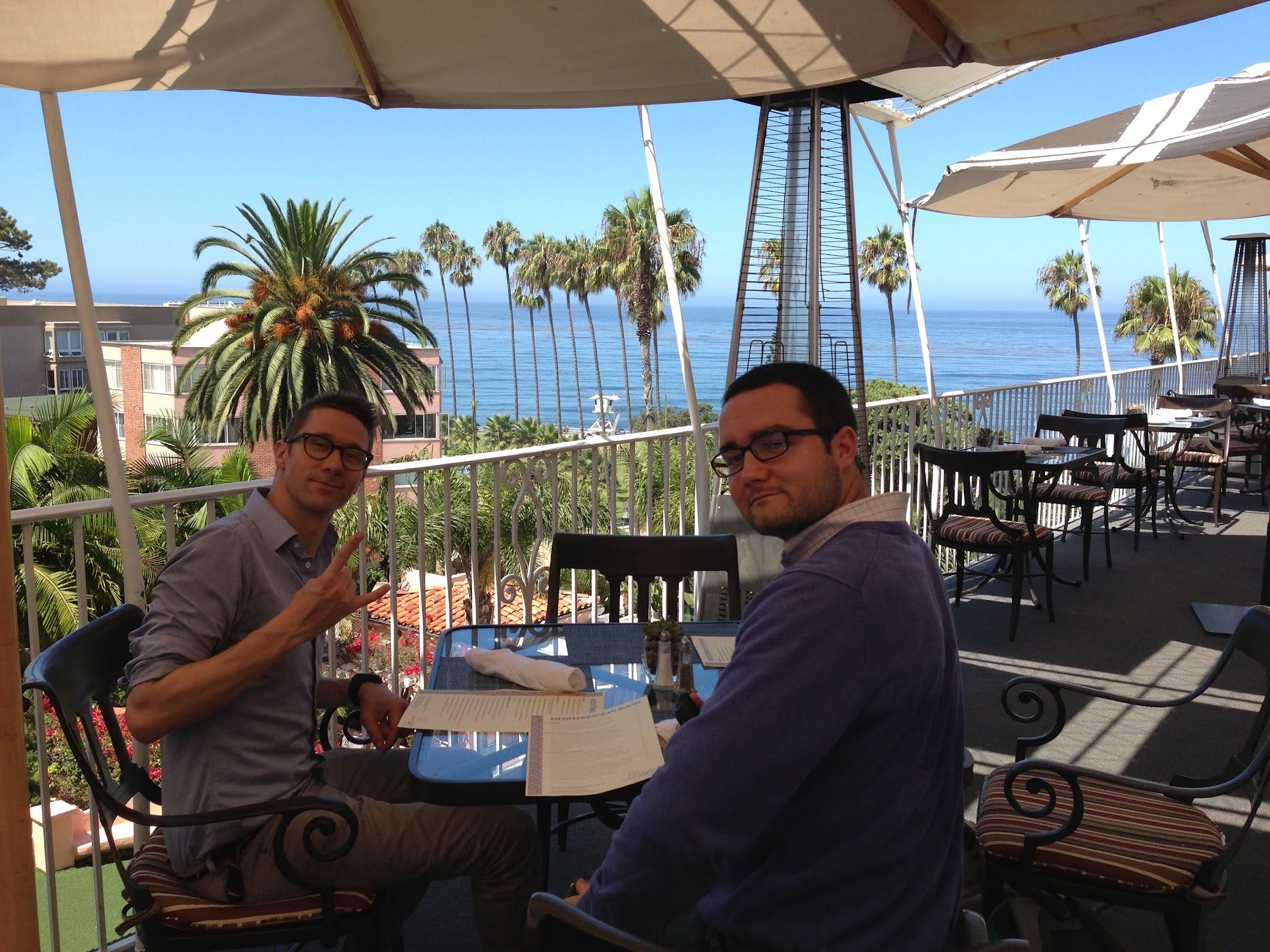
That first morning in November, sitting around a curb-salvaged picnic table in a shared office in San Francisco, we had no funding, no employees, no product, and definitely no customers. But we had something. It felt like freedom—the freedom that comes with staring at a blank canvas and touching the incandescent fire of pure potentiality. No boundaries; no one to tell us what to do. What would we create? The possibilities seemed endless, the only constraints being our collective imaginations and our commitment to building something that would make installing solar projects easier. Scanning the horizon, adventure beckoned.
At the same time, we had absolutely no idea what we were in for—that as we actually built a company and put paint to canvas, the laughs would turn into tears and we would encounter many situations that would push us to the brink—and beyond—both individually and as a team. I certainly didn’t know that serving as the CEO of Sighten and walking the entrepreneurial path would be a white-hot fire of transmutation, a container that would do more to elucidate the truth of who I really was than any esoteric spiritual practice. But as we sat at that weathered picnic table, blissful in our ignorance, everything seemed right in the universe. There would be waves, but the ocean was calm that day.
Thanks for reading! Continue the story with Part 2 (Crossing the Threshold)!